Archive for November, 2009

 November 30th, 2009 |
  Author:
 We receive a large number of CDs sent to us directly from artists, promoters, and producers, delivering a wide range of music to choose from, so we may present the best of what we can find for our readers wide variety of musical tastes.
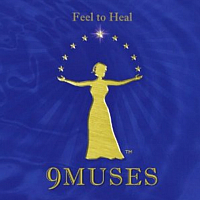 9 Muses is a recent artist to send a modern mix for those who like New Age Alternative, with melodic female vocals and a lively rhythmic beat. While listening to the CD, my foot began to tap, and it occurred to me that a lively Pop influence could be added on the album description too, since mainstream audiences will like the modern day direction this album projects.
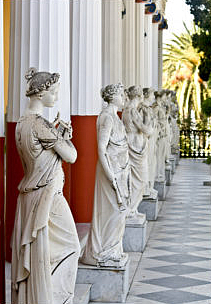
Feel to Heal is the title from 9 Muses and first in their Elements Series, that predicts more releases to follow from the artist, with this first 10 lyrical love songs belonging in the theme of 9 Greek mythological muses, whose purpose if to liberate the listeners artistic creations related to song, literature, and the arts.
Cool Water is a decorative ornamental song, with percussion and keyboard backing trendy vocals that are displayed as light and pleasant, along with a faster tempo snare drum and groove based instrumentation, giving a nice arrangement from this first muse.
 The Moon Told Me is much like the first song by the alluring vocals, rhythmic pace, and lighter melody, but the Rock style guitar runs make a noticeable distinction between this first group of songs.
The middle tempo is maintained with In My Arms, carrying much of the modern day vocals and keyboard instrumentation patterned with a similar mindset. There are also some chic percussion enhancements like heard in The Man That Never Was, which vocalises lyrical connotations of a lost love and everything that embodies.
Master Mind starts out with a memorable beginning while posturing in slower, more anticipated vocals like heard in Not Love & Just to Dance With You. Bruised Tears is also among this song formation that changes the collective mood while also sustaining the engaging sensual theme. The intriguing lyrics behind compelling female vocals are joined with moderate percussion rhythms and synthesizer backgrounds to exhibit more casual surroundings.
The 9 Muses album title song Feel to Heal rebounds boldly by a brisk tempo and set in stone ( Dun da Dun da Dunt ) energy driven Groove rhythm, having a tantalizing pronunciation in keyboard delivery that generates attention right from the start. Percussion maintains this articulated faster tempo, while the elaborate xylophone runs intermingled with the vocals effectively add an interesting angle, becoming a nice touch to a vogue song having more of a Pop resemblance.
While Feel to Heal is not a classic New Age album there certainly is an audience that will appreciate this Contemporary Vocal blend, and you can be assured can always find music to fit a wide variety of musical tastes.
9 Muses does not have a website so sample Feel to Heal at CDBaby.com.
 Posted in
  Tags:
Tags: 
I conducted an interview with John Adorney to reveal insight about a world class performing music therapist, whose beautiful relaxing compositions could easily be termed comfort music.
 John Adorney began with the Beckoning album which became an instant hit with New Age fans, likewise acquiring many listeners who simply adore the Contemporary Instrumental genre in the process. The Other Shore, Waiting For The Moon, & Trees of Gold are his preceding albums that dispense the beloved classics we easily recognize from his relaxed musical signature.
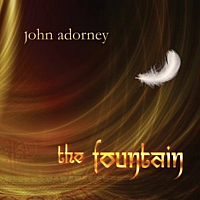
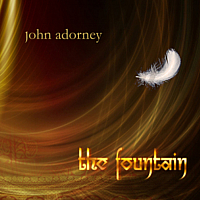
The Fountain is the newest release to showcase his reliable artistry in blending Electronic, Contemporary Instrumental and World music while quenching the thirst for a wide variety of music lovers who depend on beautiful song melodies for survival.
John Adorney wrote and produced the 11 songs for this album, along with instrumentation of piano, keyboard, acoustic guitar, cello, and percussion. Inclusive enrichment by female vocalist Daya Rawat, and African vocalist Marcel Adjibi, who wrote the lyrics, pleasantly enhance the project on a number of songs with their fluid harmonious voices.
The Fountain album takes an exploratory examination into music having an elemental influence from India and in the process, recreates the beloved John Adorney signature sound. This mosaic showing the ancient footprint of India is an aesthetic treasure openly embraced by Western listeners, along with his broad multicultural audience.
The steady stream of rich colorful songs everyone has come to expect starts with Safe Haven, securing his uplifting brand of Contemporary, Electronic, and Instrumental fanfare with an ideal beginning. The piano melody shines radiantly by administering a comforting theme in classic style while prescribing symphonic intermezzos along with lighter percussion and their clave counterparts.
Title song The Fountain is filled with the exotic touches of India, in an authentic sprinkle of spices that nicely compliments the mainstream Eastern entries. Daya softly chants an Indian passage in the song as ethnic instrumentals accompany her, along with more traditional piano and acoustic guitar rhythms.Comme Le Vent is immersed with opulent vocals by both Marcel and Daya, extending their reflections by a melody that seems to glow when placed alongside peaceful piano support to display all musicians as rich and radiant.
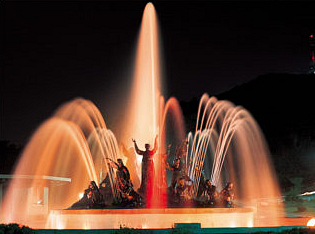 Feather on the Wind is a light picturesque blend of piano and symphonic instrumentals encircled by warm cello splashes of color. Abundant percussion rhythms in Echoes of Thunder enhance an illuminating mid tempo groove melody, while Even In Your Darkest Hour hallmarks Daya singing a soft eloquent song of peace, comfort, and hope. The lyrics are cradled by lighter percussion and an array of symphonic refrains to endorse her all is well message. An Ocean in the Drop has percussion rhythms counter piano notes tour up and down the keys.
Silk and Stone will become a favorite by the unique mosaic of multicultural sound excursions that transport you to many continents around the globe. Your flight takes off with American hand clapping and bass drum rhythms before crossing the border into Latin countries percussion clave patterns. Smoothly landing with an intriguing European groove feel and enchanting accordion entries pleasantly remind of our restful stop at the outdoor cafe.
The music itinerary then moves into Middle Eastern style keyboard navigation before boarding acoustic guitar verses reminiscent of India. Circling the globe by Southern route, Brazilian tempo celebrates the festivities before a final touchdown into John Adorney’s home country of America, arriving well relaxed by one of his more adventurous music albums in the luxurious comfort we have come to expect.
Visit johnadorney.com here to sample The Fountain and Amazon.com to purchase here. Read our interview by clicking here.
Picture copyright BigStockPhoto.com – WizData.

John P. Olsen, New Age Music World publicist and contributing author for newagemusic.nu now serves as interview host with composing musician John Adorney. During their interview together many topics are covered including John Adorney’s biography, secret to success formula for producing outstanding music year after year, and his newest release entitled The Fountain.
John Adorney began with the Beckoning album which became an instant hit with New Age fans, likewise acquiring many listeners who simply adore the Contemporary Instrumental genre in the process. The Other Shore, Waiting For The Moon, & Trees of Gold are his preceding albums and beloved classics we easily recognize from his relaxed musical signature.
The Fountain is the newest release to showcase his reliable artistry in blending Electronic, Contemporary Instrumental and World music. The album features John Adorney on piano, keyboard, acoustic guitar, cello, and percussion. Vocalist Daya Rawat, and African vocalist Marcel Adjibi, who wrote the lyrics, pleasantly enhance the project on a number of songs with their fluid harmonious voices. It’s a beautiful album from a wonderful and consistent New Age artist.
Interview with John Adorney;
John P. Olsen : Thank you for taking time out of your schedule for us. We welcome you aboard John! It is an honor to meet you not only by your status in the music industry, but BT Fasmer and I happen to be among the many fans of your music!
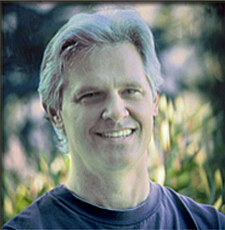 John Adorney : Thanks – it’s great to have this opportunity to speak with you!
JP Olsen : Let me start by saying, you began by playing cello at age 9, were self taught on guitar, piano, and also began composing at an early age. Could you tell our readers about your earliest introductions to music and how you first began composing music at this young age?
John Adorney : Both my parents were artists, so initially, drawing was my first love. We had a few musical instruments around the house, and from a very young age, I always loved picking them up and playing with them, picking out tunes. There was always music around the house, and sometimes I would go to church with my mother and grandmother. When the hymns were sung, they were both always singing harmony – never the melody. I think this had a big effect on me – I’ve always loved harmonies as much as anything in music. When I was 11, the Beatles hit America, and I was totally smitten with pop music and taught myself guitar – which, to me, was quite easy compared to studying the cello. Once music clicked for me, I lost interest in doing art – drawing seemed dry to me compared to music.
My parents always supported whatever I was interested in, so they bought me an electric guitar, and later a 12-string acoustic guitar. We also had two reel-to-reel tape recorders in the house, so it occurred to me that I could record myself playing several instruments. I’d record a part on cello, then play the tape out loud, playing a second harmony part along, and recording both on the second tape deck. I’d do this back and forth until the sound quality of the initial recording was so bad, I really couldn’t take it any further. I’d make up my own pieces – I think the layering idea originated from playing in orchestra, where each part is separate, but when put together, creates something large, and often, quite sublime. I actually still have some of those old recordings.
JP Olsen : Some of your scholastic studies are centered around music. Could you describe your fields of study, vocational, and educational achievements?
 John Adorney : I studied cello into my college years, and I was a cello major at the University of Connecticut. I was also I interested in psychology, so when I finished my degree at Antioch University several years later, it was with a double major in music and psychology.
Then, while teaching music at a school for handicapped children, I discovered that there was a music therapy program at Cal State University, Long Beach. I completed my music therapy training there and became a board-certified music therapist. The semester after I graduated, I was asked to teach music therapy at the University.
JP Olsen : Working with handicapped children must be a very rewarding experience and I can only imagine what that must be like, John. What are some of the challenges and personal rewards felt from your experiences while teaching disabled children, and as a music therapist, how are you able to reach out to severely handicapped individuals?
John Adorney : First, I’d like to say that we’re all handicapped – it’s a spectrum, really, that we stand on at one spot and from there, we judge someone else. I’ve had doctors tell me that someone I was working with was severely retarded, but I knew that this was just because the person couldn’t speak. Of course if someone can’t speak, they’re going to test poorly on an “intelligence” test. It was easy to see by looking in the person’s eyes that they were perfectly intelligent. Common sense is very uncommon, as a very wise man once said.
 There are so many things that are great about using music as a therapeutic medium. For one, everyone loves music, so it has a universal appeal built into it. I think that this is perhaps especially true for handicapped people. I’ve always loved working with handicapped people, because they just seemed more open to music than most people – they’re not trying to be “cool.” And if there’s any kind of intellectual limitation, then music can transcend that.
The actual application of music therapy varies, depending on what the goals are with each client. For example, an autistic person needs to connect to people – he or she lives in a fairly isolated world. My approach in this case would be to enter that person’s world with them – become a companion in their world. This might mean imitating the sounds that they make, and singing along with these sounds, finding out which songs and music the person likes, etc. Then, once I have been accepted as a friend in that person’s world, then he or she and I can venture slowly out from that world in a way that’s safe.
One client of mine has no speech, no movement, eats through a tube and breathes through a tube. She lies on her back all day looking at the ceiling. We have connected through my singing songs to her – I make them up about her, her environment, etc. The music can stimulate her or relax her, depending on what’s called for. She’s an amazing person, and it’s my honor to know her and be able to be with her. It’s all in the eyes and the smiles.
JP Olsen : I think the work you do with handicapped individuals is admirable John, and completely agree with your statement that there is enrichment and something to learn from all individuals, regardless of whether they are handicapped or not. In 1998 you joined the EverSound label and your first album Beckoning has received notoriety by becoming their most successful album to date. What awards and recognition have you received so far on all of your albums, and is Beckoning your most successful album to date?
 John Adorney : Well, it’s hard to say, whether there’s any difference between Beckoning and my other CDs other than the fact that Beckoning has been out the longest. This is probably why it has sold more than my other CDs. I saw on one radio airplay chart recently that my new CD, The Fountain, was #1, and Beckoning – which was released in 1998 – was #2.
All my CDs have all been received really well. The Other Shore won the Best New Age Recording of 2002. Really, though, I don’t think that awards have anything to do with the value of music. Music really stands on its own. To me the greatest reward is when I get an email from a fan that says the music has had a profound effect on their life. I get some amazing emails, and I’ve already gotten several in response to the song “Even in Your Darkest Hour,” from The Fountain. Writing that song was unique, as it played in my head from beginning to end, exactly as you hear it on the CD. That happens maybe once in a lifetime for most musicians, I think. We forget sometimes how magical this thing called music really is.
JP Olsen : There are many projects with EverSound label artists you have performed with and likewise guest performers on your albums. What are some of the projects have you done with EverSound label artists?
There are two EverSound artists, Lino and Curtis Macdonald, who, after hearing my CDs, wanted me to produce theirs. It was a pleasure working with both of them and hopefully, I was able to add something. They are both extremely talented composers and musicians.
I also produced Diane Arkenstone’s “Best Of” CD, which was released on EverSound. I helped gather the tracks and I arranged the two new tracks on the CD. Diane’s a wonderful human being.
JP Olsen : Your discography consists of Beckoning, The Other Shore, Waiting for the Moon and Trees of Gold. Just released The Fountain does have the Adorney signature sound, yet a unique exploration of it’s own too, so can you offer some input about the ethnic paths taken on The Fountain, along with prior releases?
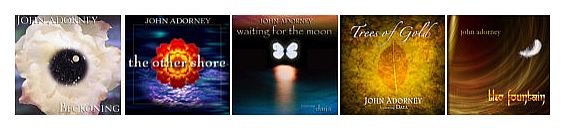 John Adorney : I’ve always been a fan of world music and different ethnic grooves and so I’ve always wanted to incorporate them into my music. I’m also a big fan of Indian music – A.R. Rahman, and other so-called “Bollywood” composers. I think Indian music is the most sophisticated music on earth, and has such a rich and ancient history. The instrumentation is fantastic, the grooves are hypnotic, and also, the Indian music is not based on chord changes, as is western music – it’s based on a drone.
I’ve always resisted using Indian sounds in my music because I respect the tradition of their music so much. But I feel there’s been a kind of new recognition of Indian musical elements fused into popular and dance music, which gave me the freedom to finally incorporate some of the Indian sounds. So I think The Fountain incorporates some of these elements more than my previous CDs.
JP Olsen : Do you have a secret to success formula for providing everyone with music having an enduring positive influence over the years, and what inspires you to create and then transfer your thoughts into your compositions?
John Adorney : I don’t know if I can say I have a secret – where music comes from is the real secret. Sometimes as musicians we get too much credit and recognition for simply being a channel for the music that comes into this world.
I always write from a feeling – never about some external thing. I love the un-defined quality in music, which is why I write mostly instrumental music. Even the lyrics in the songs I’ve done are usually open to interpretation, and I never like to say what my own interpretation is, because I don’t want to limit what someone else might experience. To me, what the musician is expressing is not what’s important – it’s what the listener feels when they hear the music.
 I’ve also benefited in my life by being a student of a great teacher named Prem Rawat. He has really cleared away a lot of the garbage in me that would have prevented this music from coming through. If people are interested, they can go to http://www.wopg.org/. That stands for Words Of Peace Global.
JP Olsen : In relation to the technical aspects of your projects, can you tell a little about how your music is produced?
John Adorney : When I first started with Beckoning, and with my second CD, The Other Shore, I was lucky to get Paul Dieter to do the mixing – he was on a break from doing work with Jackson Browne and Crosby, Stills and Nash. He had gotten a Grammy nomination for mixing Jackson’s This Time CD. I don’t even remember exactly how he heard about me, or the other EverSound artists. But I loved working with Paul, and I’d always pick his brain as he worked – I was trying to learn as much as I could about the process. Also, some of my music was mixed by a fantastic engineer, Leslie Chew, who also has taught me a lot about the mixing process. Eventually, I’d felt I’d learned enough to mix my own music, which I started to do with Waiting for the Moon.
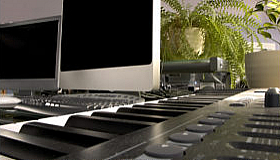
My home studio is very small, but with a keyboard and a powerful computer, you can really create some great sounds. I do a lot of tracking in the Midi realm, and then sometimes replay many of the instruments live, to give the music a more “live” feel. I’ve always loved blending electronic and acoustic sounds. Believe me, as a composer I feel very fortunate to be able to play the keyboards, cello and guitar – these really cover a lot of ground, and it helps keep the budget down! Besides – I can play the music exactly as I want it to sound.
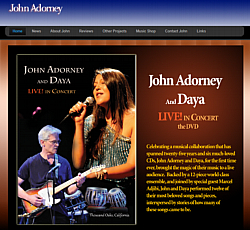 I’ve worked in Cubase and ProTools, but now I work in Logic Studio, and do some audio editing in ProTools. Logic is very musical, but I still find ProToolsto be the simplest program in terms of editing audio. Sometimes if I need to record something live, like Daya’s voice, I’ll bring my equipment to a professional studio in Westlakeand will record the live elements there. Really, all that’s needed is a quiet place and a good microphone.
JP Olsen : Daya is featured on many of your albums, lending her vocal talents that can only be described as exquisite. Her vocals compliment your music so well and is just a natural combination, so how did Daya’s singing career with you begin?
John Adorney : I was Daya’s music teacher from when she was 7 years old, until she was about fifteen. She’s always had an incredible voice, and a beautiful heart that comes through in her singing, even from a young age. We have a wonderful relationship, and she’s always happy to sing on my projects. I feel really fortunate to not only know her, but to have her sing on my music.
JP Olsen : EverSound and major retail outlets sell your music at present, but I’ve read that CD albums and individual songs will become available on your website. When is your website retail store expected to open?
John Adorney : I’m still working out the kinks on the website store. I want to make sure that it’s a really smooth experience for anyone who goes there to purchase. I know how frustrating poorly-organized websites can be. It should be up and running in the next few weeks. It’ll be fun, because then I can have individual tracks available for download that were never on a solo CD.
JP Olsen : On behalf of our readers, BT Fasmer, and myself, Thank You again for taking time out for us and giving everyone the opportunity to learn more about you on a personal level and the outstanding music you produce that keeps everyone coming back for more. We consistently play your songs on our 365 Home of the Stars Radio and invite our readers to tune in and discover the music of John Adorney.
John Adorney : Thank you – it’s been wonderful having this opportunity to talk about the music with people who are truly interested. Thanks again.
Visit johnadorney.com homepage to sample or purchase, or visit his Amazon.com page. Read our page for John Adorney. Cello picture copyright Bigstockphoto – Stab / David Martyn & johnadorney.com.
If you are one in the multitude of dreamers with an ambitious goal in mind, permit me to tell you about one musician’s personal story for reaching goals since she is a source of inspiration for those who already know and listen to her music.
 Vicki Logan first began without formal music lessons, having only a dream of becoming an accomplished musician someday. Her spirited philosophy of believing in yourself, boldly taking the risks, and then dreaming big since anything is possible, has proved to be more than just a mere statement about turning dreams into reality.
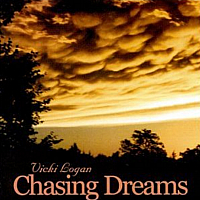
Vicki is now an accomplished and outstanding musician taking her own advice for years by creating a heartfelt 4 album portfolio where each album title and theme chronicles the subsequent chapters of her achievements along the way. Chasing Dreams began the first stage for her success and easily set a high watermark for future albums of Finding My Way, The Ride, & The Journey To the Places In My Soul, along with a much anticipated album now in progress.
Chasing Dreams reached nomination for Album of the Year in regional music charts, then her subsequent albums were established in NAR / ZMR Top 100 charts and abundant online radio airplay on AOL, Sirius Radio, and XM Satellite, grew to reach around 1000 station worldwide.
Writing the original music on Chasing Dreams, along with playing piano, strings and flute, Vicki enlists several exceptional musicians with co-producer Randy Gildersleeve on acoustic guitar, banjo & mandolin, Andy LaCasse on bass & electric guitar, and Peter O’Gorman as percussionist.
Change is the only true constant in life. Instead of fighting it, we should always look for the advantages to change, and then use them to our benefit. In the end, dreams are only dreams unless you are willing to make them a reality. New Age Music Artist – Vicki Logan.
Chasing Dreams is a 10 song classic storybook of concertos, with chapter one titled as The Only Way To Say Goodbye. This first song reveals feelings of hope for those who have lost a loved one by a moving piano piece that marks the first song notation as a memorable one. Respectful by turning each page with a soft finger to key touch, drama crescendos with every step until an emotional full chord melody is expressed, reaching a finale that I can only describe as heartfelt and poetic. The Reprise version offers another impression and moving portrayal of this exquisite melody.
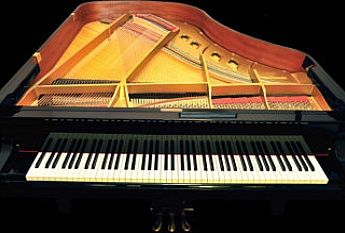 An Epoch Of Childhood represents growing to adulthood by a wonderful piano opus enhanced with guitar entries and percussion, reaffirming the positive vibes one feels from her entire album collection.
Highway 8 From Minnesota To Michigan is a piano and woodwind ballad that navigates at a mid tempo pace with flute passages describing the event as one of amazement, becoming one of your narrator’s favorites.
Beautiful by the emotion rich drama, this song is composed to stay in your mind and I do find myself recalling it often. It’s just one of the positive aspects of her classic New Age albums.
Title song Chasing Dreams is another beautiful piece to bookmark in Vicki’s story of dreams. Soft wind chimes herald in a thoughtful piano and guitar duo that unite in refined stages until the deepest emotions emerge.
The classic piano notes chord phrasing is pleasing not only to the ear, but to the heart and mind, having a wonderful rhythm that conveys only positive sentiments. The Reprise version gives another chance to hear this pleasing song in the same key, yet in a slightly faster tempo defined by synthesizer background that sheds light on this new perspective and classically displays her artistic originality.
The Hopper Song is a lively number that showcases the skills of all musicians starting with an upbeat percussion that leaps into expressive piano chords, while mandolin and banjo strum their engaging scripts with confidence. This song reminded me that writing songs to inspire people is what Vicki Logan’s music is all about. It made me picture the multitudes of optimistic dreamers out there also becoming a success, in their own personal storybook of dreams.
Vicki Logan’s story of inspiration can be read at VickiLogan.com. Read reviews for her albums including our recent artist interview and discover even more on my pages for Vicki Logan. Picture Copyright Bigstockphoto.com – trebeb.





 Read award publications for the best new instrumental, new age and electronic albums and songs.