Archive for December, 2009

 December 31st, 2009 |
  Author:


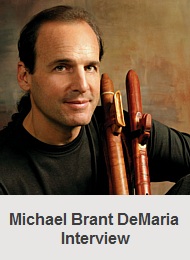
Read our musician interviews, current album reviews and music videos by clicking on the corresponding photograph.
The conservation minded 11.05 Revival release from Mars Lasar is the most recent project in the Eleventh Hour Series to make a significant statement in both the trademark designer music Mars continues to envision and next in series dedication to protection of our planet that arrives with just in time precision.
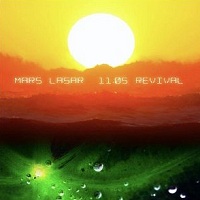 The Eleventh Hour Series relies on an electronic instrumental infrastructure to get the message out. It now appears clear Mars Lasar was just ahead of his time with the series. His deep exploratory music touches the senses while beating a constant rhythm in music lover’s hearts, exactly when a new resurgence in conservation is suddenly thrust into the forefront of the next generation’s minds.
11.05 Revival on the Sound Manipulation label approaches every aspect of Eclectic, Electronic, Instrumental & New Age Groove, canvassing the inherent beauty and peaceful serenity of our magnificent planet in an epic and colorful illustration drawn from one man’s timely musical perspective.
Earthbound exhibits a strong opening by first reaching out to grab, and then capture your attention by a distinctive percussion rhythm that steadily glides into full keyboard environment, giving a pulsating melody in motion testimonial. During refrains, choral vocals announce a clear message while swaying melody acts like a pendulum to once again move in counter-motion behind the energizing concept.
Parallel Worlds permits you to breath again while navigating at a gentler pace during orchestration crescendo revolving around lighter percussion, woodwinds and twinkling effects, giving brief moments of interlude during this unilateral event.
Some of the introspective songs heard on 11.05 Revival could be perceived as a warning for our ecological in-actions and resulting consequence to humanity, since several songs have a deep perilous atmosphere that rightfully command your attention.
Globalization conjures up equally deep and lighter emotions by modifying sound images in this majestic song that uniquely articulates the projection of imagery during his compositions. The deeply integrated keyboard and vocals are centered by a twinkling sequence to mirror the bright reflection of a full moon and resulting tidal effect.
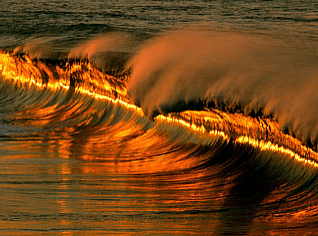 Ancient Astronaut & Final Countdown take giant leaps onto the planetary surface of ambiance by having an audible feel of intensity in their own domain. While one song is geared to a constant percussion countdown timed to the precision of a second hand with far reaching melody, another explores rich orchestration by engaging brass, winds and strings that seem to defy gravity by dynamic theatrics alongside intertwined lighter and deeper orchestra concertos.
Next Millennium has a design of the future piano melody with counter beat notes and intriguing voice box dialog that competes for your attention. Moderate patterns return with several songs in a mid tempo pace and feel like heard in Evolution. Graceful Orbit has a cycling pattern by the static effect, strings and vocals. Celestial Challenge has a voice box dialog with flute in an engaging improv sequence and Guide To The Ozone shows a blend of instrumentals drawn into softer songs that float along accordingly.
By The Sea ushers in the relaxing singing of a new age vocalist, where Contemporary Jazz is introduced to softer classic vocals alongside piano and saxophone accompaniment, lending a soulful and poetic touch which nicely compliments 11.05 Revival and newest release in the Eleventh Hour Series.
Mars Lasar has truly made a bold testimonial in this timely masterpiece, renewing the true spirit behind the Eleventh Hour Series while also personifying his dedication to conservation music legacy. The positive aspects of our world worth saving are clearly shown in unison with the extreme challenges ahead, exactly when the music of today’s generation and inherent staff of conservation awareness is carefully relayed into the open arms of the next generation.
Visit MarsLasar.com to sample or purchase 11.05 Revival and other new age albums or visit Mars Lasar’s CDBaby page. Picture Copyright Bigstockphoto.com – karmaamarande.
* The Eleventh Hour Series 11.05 Revival has a 10 % donation to conservation.org with your album purchase.
 Posted in 2009 Album Review, Electronic Music, New Age Music World |
  Tags: Mars Lasar |
  No Comments »
There are a multitude of genres where an acoustic guitar enables an artist to express themselves personally. When placed in the hands of a skilled musician, this stringed instrument becomes a beautiful companion, telling everything about the artist with each passing measure.
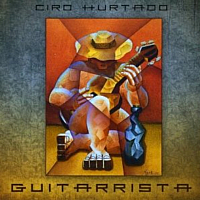 Ciro Hurtado is one skilled solo guitarist or guitarrista from California, whose performances include Traditional Latin, American Folk, World, Fusion, Latin Jazz, and many more popular genres, becoming adapted to many forms of personal expression. His natural talent, along with studies at the Guitar Institute of Technology have placed him in a well recognized stature as a musician, highly regarded for his artistic technical abilities and versatile rhythms for many years now.
Ciro’s musical compositions on guitar are not limited to specific categories since his adaptable styles also range from more traditional Jazz, Flamenco, Classical, Pop, Blues, and Rock, so versatility does play an important role in his music.
Guitarrista is the 5th album to explore his talents as a guitarist, where many rhythms and sub rhythms on this project are abundant, in a solo album that finds many points of interest during this thoughtful encounter with individualistic expression. Latin influences play an important factor during his many changes in style too, as both hands connect with the strings in a well versed manner.
Performing without percussion, brass, or winds, his solo touch of the strings give multiple layers of well versed melodies and nicely done sub rhythms, giving me the impression that any added musical accompaniment would be unwanted sound that just gets in the way of his unique approach to this solo guitar album.
The intricate patterns, along with a relaxed atmosphere, greatly emphasize his individual composing and performance skills, while also telling a beautiful story to his audiences.
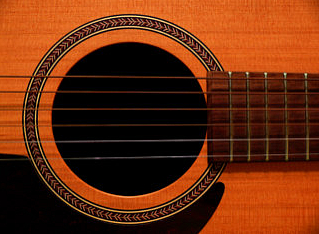 Besides his solo projects, and performing with Strunz and Farah, he founded the popular group Huayucaltia, touring in the U.S. and other countries while opening for Sting, Jackson Browne, Carlos Vives, and other highly regarded artist. His numerous movie and documentary musical score credits are recognised in the film industry as well, since producers have also taken note of his versatility as a guitarist.
Ciro Hurtado’s prior albums In My Mind & Tales From Home both have accompaniments that blend just right with acoustic guitar, and expert performances are shown in all of his albums.
This comes from a person who recognizes that the guitar is really just a pretty instrument, and that a beautiful outcome is always dependent on whose hands the guitar is placed.
Visit cirohurtado.com to sample here, and cdbaby.com here.
Picture Copyright Bigstockphoto.com – devulderj.

Composing musician Dr. Michael Brant DeMaria, clinical psychologist, recognized poet, author, public speaker, and now recipient of a prestigious Grammy Nomination, was interviewed by John P. Olsen, New Age Music World host and contributing author with NewAgeMusic.Nu.
Interview with Michael Brant DeMaria;
John Olsen : Giving the fact the Christmas season has arrived, your musical and professional endeavors are numerous, thank you for taking time out for us Michael. BT Fasmer and I also congratulate you on your current Grammy Nomination and recent win with the Native American Music Award, (NAMMY) in the Native Heart category in October. This must be very rewarding, so how does it feel to be recognized by these achievements, and why do you think Siyotanka makes such a decisive impression on those who make award decisions?
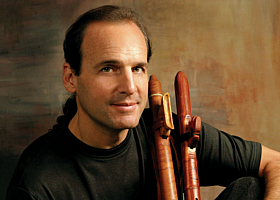 Michael Brant DeMaria : Thank you so much John, and please thank BT Fasmer for me. Your words are greatly appreciated. It is a great honor to be recognized with a Native American Music Award.
Although I work in many genre’s of music including New Age, World and Ambient music – I have a deep love and respect for Native American culture, music and wisdom and it’s meant a great deal to me – so this honor is particularly meaningful. The music of Siyotanka really appears to have touched many people with its sincerity, simplicity and honesty.
My goal with the music was to serve the story and try to tell the story musically even if you had never seen the play or are even unfamiliar with the Legend of Siyotanka. What’s beautiful about it is it is really an archetypal story for musicians.
We don’t have room to go into the whole story here – but what I can tell you is it’s a story about finding the song that lies inside of our hearts and the importance of sharing that song with the world – because it is that soul song that tells us who we are, where we come from and where it is we are going. Ultimately, it is also a story about peace – how wood is fashioned for the first time into an instrument of love instead of into a weapon of war. I think that is truly an important story for our time.
John : You have also performed with Grammy nominees, past winners, and are now among a select group of musicians. Who are the artists you have performed with in the past, and what is it like to perform with these other fine musicians?
 Michael : Thank you again John for your kind words. It is an incredible honor to be recognized in this way. My first love was music and it has been my therapy and a balm to my heart and soul so often in my life. I’ve had the honor of performing with many of my musical heros. Two in particular, David Darling and R. Carlos Nakai are two that inspired me for many years.
It was Nakai’s Earthspirit which was the first Native American Flute recording I ever heard. It literally brought tears to my eyes. David’s cello can also just reduce me to a puddle. To admire someone for so many years and then have the opportunity to play with them is a true joy. I actually have studied with David over the last four years and am know certified with him as a Music Improvisation Teacher through his Music for People program. He has a huge and generous heart. He’s nominated in the New Age category this year.
John : Perhaps you could tell us how your musical odyssey began. What were the circumstances of your early beginnings in music, and how did you progress from there?
Michael : At the age of 6 years old I would go to the family piano and strike one note at a time and close my eyes to enjoy listening to the note arise and then slowly dissipate. I could do that for long stretches of time. I had a number of surgeries as a child and I realized at a very young age that this process was very healing and soothing for me. I realize now as a psychologist it was a form of music therapy I was practicing – like meditation or self-hypnosis – a trance state if you like. For me, all I know is it felt very sacred to me and could take me to another world.
Then the next turning point musically came when I was 9 years old when I heard my first live jazz at the local high school auditorium. I was absolutely captivated by the drummer on his pearl white drum set electrifying the audience with his syncopated rhythmic playing. My heart did a triple back flip with a double twist – I was just blown away ! I went home that night and announced I was going to be a drummer. It didn’t go over too well – we were a quiet Catholic family – but I sat and practiced my drum pad for months until my parents saw I was serious enough and then one day relented and bought me my own white pearl set of drums that I just adored and played every chance I could get. I had found rhythm and I was addicted !
Then at the age of 18 I bought my first Moog synthesizer. That 6 year old that liked to plunk one note at a time was totally blown away with the sounds that came out of this synthesizer – WOW ! It was like a drug for me. And not only could I generate a sound, but I could modulate it in all kinds of ways. I became a dedicated synthesist for many years. I always heard sounds within me that I have sometimes called the music of the spheres or the hum of God – and here was this keyboard that allowed me to explore to my heart’s content some really wild, far out sounds.
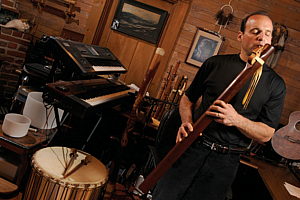 Then, at the age of 31 while heading out to enact a very traditional vision quest in Canada I heard a Native American Flute for the first time – and that took me to a whole other world. There was something about the bittersweet, hauntingly familiar sound of the flute that took me to an even deeper place inside. I had never played a wind instrument before and to make sound with your breath – well, there is nothing quite like it. What was different about the flute was I was in need of some profound healing – it helped me cry and grieve and slowly, but surely brought me back to life after suffering from what I have come to call ‘compassion fatigue’ after working with severe cases of child abuse and neglect for many years. As a result, I’ve spent the last 16 years exploring a variety of ethnic and world percussion and aerophones into my music resulting in my last three commercially released albums, The River, Ocean and Siyotanka.
John : Later in life you began your own private practice as a clinical psychologist and therapist, creating ONTOS, to help individuals and groups advance in life. What are the principals, mission, and what led you to create ONTOS?
Michael : ONTOS is the Greek word for Being. Being is the most inclusive word in every language. The verb ‘to be’ weaves its way in and out of every sentence and every moment. It refers to the most mysterious essential core of who we are – our inmost Being. For me Being refers to the wholeness that we already are when we connect to the truth that is in our hearts – which is our natural interrelatedness with each other, the natural world and the cosmos – ultimately to all things.
We are very lost today as a culture and a species. We have lost our natural sense of being part and parcel of the earth and cosmos. We have rather been taught the big lie of western culture that somehow we are different and superior to nature when in fact we are part and parcel of nature – we are a part of the web of life, not the owner or exploiter of it.
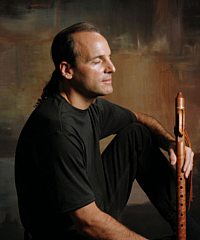 We are paying a dear price for that today – and we need this deeper wisdom of the interconnectedness of all beings to get back into a healthier alignment with the natural world and each other. All human beings share 99.9 percent of the same DNA – only .1 percent accounts for all the differences between all people.
We are all truly brothers and sisters, siblings in the cosmos. We even share 50 percent of the same DNA with Bananas! We are all connected with all living things. The mission of Ontos is to know that people heal and get better when they begin to experience their connection to life, nature and each other in a more fundamental and profound way.
John : Stress for the caregiver is always a result when providing treatment to patients, so how do you yourself regroup, after treating hospice, cancer patients, and abused or neglected children in your care?
Michael : Music, meditation and time in nature. I like to say my holy trinity is nature, creativity and spirituality. They bring me back into alignment. Another analogy I like to use is if I go to the river and get a bucket of water and bring it to people who are thirsty I have to be honest with myself when the bucket is empty and return to the river.
In this way, I remember that I am simply a fellow journey or who is all too human and I try very hard to remind myself to take care of myself in order to be of good to others. I’ve burned out once before and am very sensitive about avoiding that again. For this reason I limit my clinical work to three days a week – and try to keep 4 days a week open for my creative work. This has been a really nice balance for me. Creativity tends to put into my heart and soul what therapy takes out – and therapy tends to put in what creativity pulls out. It’s like crop rotation – replenishing myself by alternating between being an artist and a healer.
John : In your Healing Sound Series you began with The River, which led to the Ocean album. Your next in series will be titled Earth. What led you to begin the series, and in what ways are the albums alike and what are some of the tonal differences in the series?
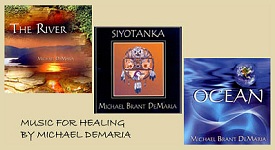 Michael : Great question John. The Healing Sound Series arose from my desire to use music in a way that our ancient ancestors understood it’s use most – for healing.
Our culture is the only culture on the planet that has used music primarily as a form of entertainment. To the ancient and indigenous cultures on our planet music was always used as a form of community building, ritual, meditation, prayer and most importantly, healing. The medicine man or woman used music, dance and song to do their healing work. This was the first inspiration for the Healing Sound Series.
The second is that as a psychologist I make sound tracks for relaxation tapes and visualization journeys for my clients and have for the last 25 years. I wanted to challenge myself to use this music and make it available to massage therapists, acupuncturists, yoga teachers and meditation teachers on a larger basis. It is also the desire of that 6 year old inside of me that still sees the miracle of life being how something arises and then disappears – perhaps it is an acknowledgement of the fleeting nature of life and how we each come into the world as a song and then must also eventually return to that place we came from. The River actually arose out of my work with hospice patients and my belief that life is like a river – and that when we die – like the river – we just change form as we empty our being into the vastness of Being itself – the Ocean.
The Ocean became a natural follow-up to the The River – to explore this more formless place – the place from which the river comes from and to which it returns. You see this whole mysterious process of living and dying just fascinates me to no end – and music has been an amazing vehicle for me to explore this fascination in a healing way – and it turns out has been healing to others as well – which gives me great joy.
John : Your current release Ocean is dedicated to hurricane survivors like yourself, and reflects on events that have happened in your life. Do you mind telling about this past event, and what is your musical objective for you and the listener?
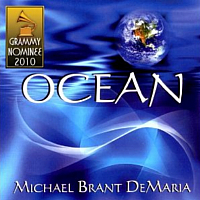 Michael : The Ocean album documents a particularly tragic and painful time in my life after we lost our home during hurricane Ivan. We had to move into the back of my office – my daughter was a senior in High School at a time.
Our lives were turned inside out and upside down when a 15 foot wall of water enveloped our whole neighborhood. 90 percent of the homes on our street were destroyed. The place I taught my daughter to ride her bike, do her first cartwheel and build her playhouse – the place we called home would never be the same.
The water had always been a source of relaxation and peace for me – now it looked anything but – an ominous, unpredictable and dangerous force. It really took me initially to a dark place – but it was out of this darkness that the music started to teach and heal me. I started having dreams of swimming with dolphins, whales and strange underwater creatures. The music really reveals that out of this darkness something beautiful comes.
John : Siyotanka hit #1 and remained in the Top 20 chart for 6 months, you went on to win a Native American Music Award (NAMMY) in the Native Heart category, recently presented in Niagara falls. This album is based on a story, so could you tell us the storyline, and theatrical aspects of Siyotanka?
Michael : Siyotanka is the Lakota word for ‘flute’ and sometimes is translated as ‘great song’. The legend of Siyotanka involves how the first Native American Flute came to be. It’s about a boy trying to find his place in the world.
He thinks he is to hunt and elk – but doesn’t have much success and on the way he is distracted by this hauntingly beautiful, ghost like music. He follows the sound until he comes to a cedar tree that has had a branch hollowed out by termites.
There is a woodpecker who has hollowed out a number of holes in the branch and is jumping from one hole to the other and as he does the wind blows through the branch and creates this mysterious music. He wants nothing more than to make this wood sing like that. It takes time and many adventures – a vision quest, a dream of the spirit of the woodpecker and many other lessons, but finally he learns to make the wood sing. He learns about humility, respect and listening deeply to Nature.
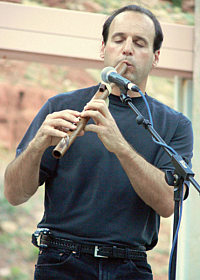 The story reminds us when we are lost and alone, feeling rejected and abandoned, if we look inside our hearts and find the song that is living there we can find our way even through the darkest of times. How a piece of wood can be fashioned into a musical instrument instead of into a weapon – to bring peace instead of war, love instead of hate. Truly a story for our time. The play itself was quite a production. We had a 30 person production team with actors, crew, a beautiful set designed by my co-writer Stephen Lott who also did the ‘shield’ for the cover of the CD. You can find much more about the legend and some of the story behind the music at www.siyotanka.com
John : You also are currently working on another album titled Voices, which explores new territory for you. What can we expect from the Voices project?
Michael : This is something I’m very excited about John. Voices will be just that – nothing but human voices. I have been working with my voice more and more – and I’ll be using multi-layering of my voice and perhaps some guess vocalists on this album and we hope it will be a wonderful addition to the Healing Sound Series.
John : In the past you have said nature inspires you the most. What aspects of nature, and how does silence, and individual notes from beginning to end, play an integral role in what you want people to hear and experience in your music?
Michael : My holy trinity is Nature, creativity and spirituality. For me nature is God’s art. When we immerse ourselves in nature we are putting ourselves in alignment with the creative infinity of the universe. Nature has a way of not only healing us, but inspiring us. To me the music of nature is the most profound. There is an organic quality and rhythm to the sound of nature. For me it’s the music of life itself. I never tire of listening to the many sounds present in the natural world. I say I get many of my best stuff from the feathered one’s (the birds)!
John : The instruments you play are keyboards, synthesizer, indigenous flutes, percussion, claves, and other aerophones, but you consider yourself a flutist at heart. Why is the flute your passion, and what are some of the varying tonal attributes in the indigenous flutes and percussion instruments used in your music?
 Michael : Yes, John, although I grew up playing keyboards and percussion – and fell in love with the synthesizer in my late teens and 20’s – I’ve come to realize I’m a flute player at heart. There is something about using my breath to create music that connects me with the spirit-that-moves-in-all-things in a profound way. I disappear into the music playing the flute like nothing else. I close my eyes and it’s the closest thing I have ever experienced to flying. I feel my spirit soar when I play – and it is a thrill and joy like no other for me.
John : You have presently authored 3 personal growth books, and have stated a love for poetry having performed on stage with world renowned poets. Could you tell us about the books you wrote, and some of your experiences as a recognized author and expressions as a poet?
Michael : I have written 3 books. The first Horns and Halos: Towards the Blessing of Darkness is more of an academic work. This was published in 1992 and explores the terrain of love/hate relationships. I was working with child abuse victims at the time – and I was trying to understand how loving relationships could turn so violent. It was a way for me to make peace with much of the tragedy I was witnessed to for so many years in my early clinical work.
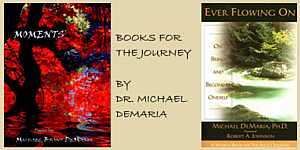
My second book, Ever Flowing On: On being and becoming oneself is a book for a general readership and was my first attempt to write less academically and more from the heart. It includes the story of my first vision quest and my love of music and nature. It is a personal growth book for the serious seeker. It has also been called a wisdom book for the soul’s journey. It is broken into 4 parts, The Source, The Abyss, The Quest and The Dance. It was inspired by a dream where my grandmother came to me and asked me if I died tomorrow, what of value do I have to leave my daughter. My goal was to write down what I felt was important in living a life. It is a book that is near and dear to my heart – a labor of love ultimately for my daughter.
My last book is Moments, which is my first full length collection of poetry. Next to music, poetry is my favorite form of expression. It has always been a companion for me during dark times. It was a great joy for me to play with Robert Bly and David Whyte, both of whom have inspired me creatively in many ways. I can’t remember who said it, but the quote I love most about poetry is that in every poem the universe gives up a secret. I really like that idea – and I personally experience it that way. For me, life itself ultimately is a poem – and to live fully and well is to become an artist of life.
 John : Your achievements and experiences are just too numerous to list in this single interview Michael, so I wanted to give you an opportunity to tell our readers anything about yourself we haven’t covered in our interview.
Michael : John, you have been so kind and generous with your words. It’s an honor to be part of newagemusic.nu. I guess the only other area I’d like to share about is that in addition to Siyotanka I have written another play, Café Mezzo that was produced and received wonderful reviews including best play of the year for the theatre it was produced in (The Loblolly Theatre). I have also written a full length screenplay that I hope to see produced one day. My greatest love is weaving music, words and images into meaningful and hopefully healing stories for the soul’s journey. Stories and music have tremendous power to move us and transform us – so it is my hope in my creative work to add a bit of sanity and beauty to a world that is in desperate need of it. I hope I can also inspire others to share their own creative expressions. For me, the artist does for a culture, what a therapist does for an individual. So ultimately all my work arises from the same inspiration and motivation – to heal and become more and more whole – individually and collectively.
John : We wish the best for you as a Grammy nominee Michael. It’s been an honor to learn more about you while preparing, then conducting our interview together. On behalf of our readers, thanks again and let’s keep in touch.
Michael : Thank you so much John. I have thoroughly enjoyed this interview and the depth and genuineness of your questions. Yes, by all means let’s stay in touch – it’s again a joy to be a part of newagemusic.nu! Wishing you, your family and all your readers a blessed holiday season!
Visit Michael’s ontos.org website. My album review of Ocean and related articles are on Michael’s page.
There is a footnote to this Interview. Michael informed me that ZMR has placed his Ocean album at the Top # 1 Recording for November 2009. In addition, Improvijazzation has selected Ocean as their Best Ambient Album of the Year for 2008. This is great news, and we are proud to present some of today’s top talents in the music industry to our readers. Congratulations again Michael! Photos are courtesy of ontos.org.
Posted in An Interview with John P. Olsen, New Age Music World |
Tags: Michael Brant DeMaria |
No Comments »
Katrina is a name that brings up vivid memories and sense of helplessness for all who witnessed the hurricane’s massive devastation and became the largest natural disaster in American history.
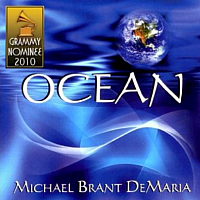 Michael Brant DeMaria, PH.D. is a clinical psychologist, composing musician, poet, author, and dedicator of his Healing Sound Series to all hurricane survivors past, present, and future. In his psychotherapy practice, Michael created ONTOS ( Greek for Being ) to help people live more meaningful and effective lives, and his ambient music is designed as therapy to help assist survivors by easing their return to coastal living again.
While writing this review I learned Michael was among those who lost their family home during the 2004 – 2005 hurricane seasons, so his therapy support does arrive from a first person perspective.
The River began the Healing Sound Series, with Ocean second in the series based on over 25 years of personal and professional research in the fundamental principals of sonic healing techniques, helping survivors relax and return to a more peaceful existence through ambient sound techniques.
His third release Siyotanka won the Native American Music Award in the Native Heart category, being placed on the Grammy ballot for Best Native American Music Album, while retaining the # 1 position on ZMR charts in February 2009. His music, art, and poetry acquired U.S. recognition while gaining international acceptance in Australia, Europe, and Russia, touching the lives of many persons.
The Ocean album helps reclaim the natural bond we share with our greater oceanic waters, rejuvenating our vital relationship by interweaving calming ambient therapy, in a bright reflection that restores a more positive link with our mysterious, life sustaining hydrosphere.
Ocean responds by calming ambiance and some unique blending of World & Contemporary instrumentals of Native American flute, African Djembe, Middle Eastern Doumbek, Indian Sruti box and Aerophones. More traditional keyboards, piano, and percussion also form the connection into 11 songs reflecting titles in the theme of our primarily blue planet.
 Open Water begins with a compelling quiet stillness, approaching more subtle moments before synthesizer starts the slow emergence into woodwinds equally calming approach, nicely illustrating the vast waters that comprise over seventy percent of the Earth.
Light ambient notes appear in Moonlit Sea to instill a moment of solitude before woodwind flute begins a comforting reflection by softer drawn out notes, generating a gentle shimmering effect like small surface ripples moving outward on top of peaceful waters.
Transformation enters a flute prelude with graceful motions that show like soft sound waves quietly lapping against the shoreline and ambient notes soon appear like airy clouds that drift alongside bass percussion signaling an ancient rhythm. The distant chants put forth a revitalizing atmosphere while deeper tones give an impression of deep universal depths, before bringing the lighter theme back to the surface.
The commingling of deep and shallower notes are also heard in Remember, conveying soft chants and woodwinds while interacting with a deeper mesmerizing background, defining the chosen ambient theme for the album as a pleasant and relaxing one.
In Search Of Home divulges into intrigue I felt was natural, enchanting, and just right for a final reflection about the Oceans since we enjoy, yet depend on them so much. Just like our hydrosphere which pretty much remains a universal unsolved mystery that completely surrounds us.
Visit Dr. Michael Brant DeMaria’s website at ontos.org. Music can be sampled and purchased at ontosmusic.com here, or his CD Baby.com page here.
Picture copyright Bigstockphoto.com – argus456.
We will present an Interview with Michael Brant DeMaria PH.D. in the near future. John P. Olsen is preparing the in-depth questions to examine his expansive career as clinical psychologist, musician, public speaker, poet, and author.
In the Grammy Nomination Awards ceremony held on Thursday, December 2, 2009, Michael was among those honored by his nomination to the list of candidates for a prestigious Grammy Award, being the top award in the music industry.
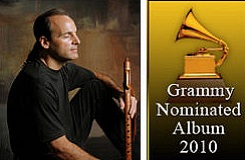 Siyotanka is the release that placed his name in contention for the Best Native American Music Album. Upon hearing this outstanding news about Michael just hours ago, B T Fasmer and I wish him the very best, when the final winner is decided and the award is presented to one of the five equally deserving nominees.
Prior to this news release about Michael’s Grammy Nomination, his Siyotanka album, which tells a story in song, decisively won a coveted Native American Music Award, ( NAMA ) in the Native Heart category, winning a prestigious ( NAMMY ) of the many well respected contenders.
In his psychotherapy practice, Michael created ONTOS to help people live more meaningful and effective lives. His music therapy expertise was acquired by personal and professional research in the fundamental principals of ambient sound techniques, acquired throughout his 25 year professional career.
His Healing Sound Series began with The River, and second in series Ocean, are prescribed with a relaxing ambient concept to assist with life issues, or as stress relief to hurricane survivors, for which the Ocean album is dedicated.
Learn more about Dr. Michael Brant DeMaria before the Interview is posted, by visiting ontos.org here and his music store ontosmusic.com here. The current review of his Ocean album titled Oceanic living can be found on our pages dedicated to Michael Brant DeMaria. Congratulations on your Grammy Nomination Michael!





 Read award publications for the best new instrumental, new age and electronic albums and songs.